Flat Online Library: Streamlining Digital Education and Book Access
In an era where information is the most valuable currency, the ability to access educational resources quickly and efficiently defines academic and professional success. The concept of a Flat Online Library represents more than just a digital repository; it symbolizes a shift toward streamlined, user-centric design in educational technology. For students, educators, and lifelong learners, the transition from physical shelves to digital interfaces has removed geographical barriers, yet it has introduced new challenges regarding organization, accessibility, and visual clarity. Understanding how to leverage these digital ecosystems is essential for anyone looking to optimize their study habits or manage institutional resources effectively.
The modern learner often faces a paradox of choice. With millions of science textbooks, education manuals, and digital books available at the click of a mouse, finding the right material can feel overwhelming. This is where the philosophy behind a flat design approach becomes critical. By stripping away unnecessary visual clutter and focusing on intuitive navigation, a well-structured online library allows users to focus on what matters most: the content itself. Whether you are a university student preparing for finals or a professional upskilling in computer reading techniques, the interface through which you access knowledge significantly impacts your retention and efficiency.
Bridging the Gap Between Physical and Digital Resources
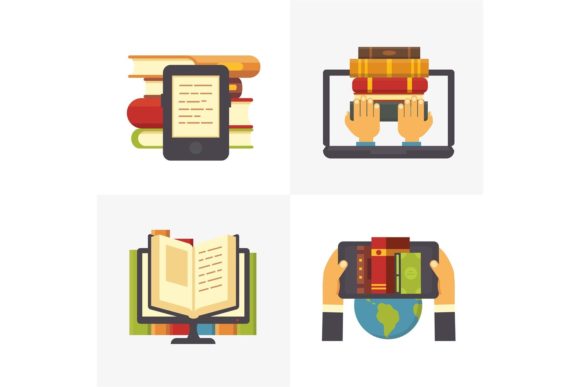
Traditional school libraries have long been the heart of educational institutions, but they are limited by physical space and operating hours. A robust digital alternative solves these logistical constraints. When we discuss accessing school library books via a laptop, we are talking about democratizing education. Students no longer need to rush to campus before closing time to reserve a specific science textbook. Instead, they can access high-quality educational materials from the comfort of their homes, cafes, or during commutes.
However, the mere existence of digital files is not enough. The user experience must be seamless. This is why many developers and designers are turning to isolated vector illustration icons sets to enhance usability. These visual cues help users instantly recognize categories such as "Science," "History," or "Computer Science" without reading lengthy labels. For instance, a distinct icon representing a microscope immediately signals biology resources, while a gear icon might denote engineering or technical manuals. This visual language reduces cognitive load, allowing users to navigate vast databases with speed and precision.
Enhancing Study Efficiency Through Visual Clarity
For university students, time management is crucial. The ability to quickly locate and download required readings can mean the difference between a stressful night and a well-prepared exam. A platform designed with flat principles prioritizes functionality. It ensures that search bars are prominent, filters are easy to apply, and download buttons are unmistakable. When studying complex subjects like advanced mathematics or theoretical physics, the last thing a student needs is a confusing interface that obscures the path to the necessary PDF or ePub file.
Moreover, digital books offer features that physical copies cannot. Adjustable font sizes, built-in dictionaries, and search functions within texts allow for deeper engagement with the material. Computer reading skills are evolving; learners are now expected to skim, scan, and deep-read digitally. A well-designed online library supports these varied reading modes by offering clean, distraction-free viewing environments. This is particularly beneficial for individuals with visual impairments or learning differences, who can customize their reading experience to suit their specific needs.
The Role of Vector Graphics in User Experience Design
Behind every intuitive digital library lies a thoughtful design strategy. The mention of product files, specifically one vector EPS10 file, highlights the importance of scalable graphics in web development. Vector images are resolution-independent, meaning they look crisp on any device, from a small smartphone screen to a large desktop monitor. This scalability is vital for maintaining a professional appearance across all platforms.
Designers and developers who utilize isolated vector elements can create highly customized interfaces. If an institution wants to separate elements, remove outdated icons, or edit colors to match their branding, they can do so easily using vector editors like Adobe Illustrator. This flexibility ensures that the online library remains visually consistent with the institution’s identity while providing a modern, fresh look. It also allows for rapid updates; if a new category of books is added, a matching icon can be created and integrated seamlessly without disrupting the overall layout.
Practical Applications for Different User Groups
Different users approach digital libraries with distinct goals. Educators, for example, may use these platforms to curate reading lists for their courses. They benefit from bulk download options and the ability to share direct links to specific chapters or articles. For them, the reliability of the server and the organization of the digital store are paramount. A chaotic interface wastes valuable teaching time, whereas a structured system enhances lesson planning.
On the other hand, independent researchers and professionals seek specific, niche information. They rely on advanced search capabilities and accurate metadata. A flat design interface that clearly displays author names, publication dates, and citation formats helps these users verify sources quickly. In fields like medicine or law, where accuracy is non-negotiable, the clarity of the presentation reflects the credibility of the content.
Students, particularly those in STEM fields, require access to up-to-date science and education textbooks. Digital stores that update their inventory regularly ensure that learners are studying the latest theories and discoveries. Furthermore, the cost-effectiveness of digital books compared to printed editions makes higher education more accessible. By reducing the financial burden of textbooks, online libraries contribute to a more equitable educational landscape.
Implementing Effective Digital Reading Habits
To fully benefit from a Flat Online Library, users must adopt effective digital reading strategies. It is tempting to multitask while reading on a laptop, but this often leads to poor comprehension. Creating a dedicated study environment, even digitally, is essential. Utilizing browser extensions that block distractions or using e-reader apps that mimic the page-turning experience of physical books can help maintain focus.
Additionally, organizing downloaded files is crucial. Just as a physical desk can become cluttered, a computer’s download folder can become unmanageable. Establishing a clear folder structure based on subject, semester, or project type ensures that resources are always retrievable. Many digital library platforms offer personal shelf features, allowing users to bookmark favorites and track reading progress. Leveraging these tools can transform a passive collection of files into an active learning hub.
In conclusion, the evolution of library services into digital, flat-design-oriented platforms offers unprecedented opportunities for learning and growth. By combining accessible technology with thoughtful design elements like vector icons and intuitive navigation, these systems address the real-world needs of students and professionals alike. Whether you are accessing school library books on a laptop or browsing a global digital books store, the goal remains the same: to make knowledge accessible, understandable, and actionable. Embracing these tools not only enhances individual study outcomes but also contributes to a broader culture of continuous education and intellectual curiosity.