Mastering Consistency: The Strategic Value of a Music Practice Sheet
The journey of musical mastery is rarely defined by sudden epiphanies or overnight success. Instead, it is built on the quiet, often unglamorous foundation of daily repetition. For students, educators, and self-taught musicians alike, the greatest challenge is not necessarily technical difficulty, but consistency. This is where the humble Music Practice Sheet transforms from a simple piece of paper into a critical tool for cognitive organization and skill acquisition. By externalizing the practice process, musicians can shift their focus from remembering what to do, to actually doing it.
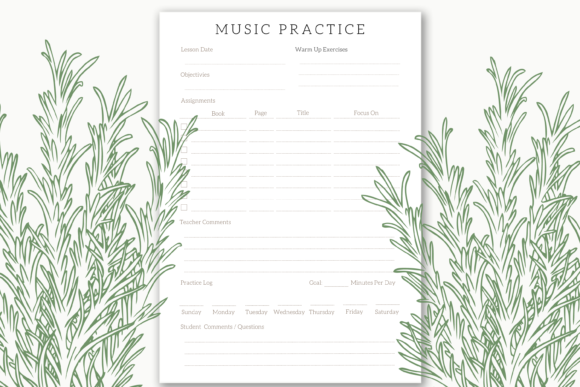
In an era where digital distractions are endless, the tactile nature of a physical logbook offers a grounding effect. A well-designed Music Practice Sheet 1 Page PDF 6 x9 provides a structured framework that fits seamlessly into binders or folders, offering portability without sacrificing detail. This article explores how utilizing a dedicated practice log can revolutionize your approach to learning, ensuring that every minute spent with your instrument yields maximum return.
The Psychology of Structured Practice
Many musicians fall into the trap of "mindless repetition," playing through pieces without specific intent. This approach often leads to plateauing or, worse, ingraining mistakes. A Music Practice Sheet acts as a contract between the musician and their goals. It forces the user to define objectives before picking up the instrument. When you write down "Practice Smarter, Not Longer," you are acknowledging that focused intensity outweighs passive duration.
Consider the cognitive load involved in learning a new piece. Without a plan, a student might spend twenty minutes figuring out where to start. With a structured sheet, that decision is made beforehand. The sheet segments the session into manageable components:
- Daily practice time: Setting a realistic timeframe prevents burnout and encourages consistency.
- Assigned pieces to practice: Clearly listing repertoire ensures no aspect of the curriculum is neglected.
- Warm Ups: Prioritizing technical exercises prepares the body and mind for complex tasks.
- Special instructions for each piece: Specific cues, such as "watch the tempo change in measure 12," direct attention to problem areas.
This segmentation reduces anxiety. Instead of facing a mountain of work, the musician sees a series of small, achievable hills. This psychological shift is crucial for maintaining motivation over the long term, particularly for children who may feel overwhelmed by vague instructions like "practice your scales."
Bridging the Gap Between Teacher and Student
One of the most underutilized features of a comprehensive Music Practice Sheet is the section dedicated to Comments and communication between teacher and student. Music education is inherently dialogic. However, lessons are often short, and details can be forgotten by the time the student returns home. A shared logbook serves as a continuous thread of communication.
For teachers, this space allows for precise feedback that transcends verbal instruction. Writing down "Remember to lift your wrist on the staccato notes" provides a visual reminder that the student can reference repeatedly during the week. For students, especially younger ones, being able to write questions or notes about their struggles empowers them to take ownership of their learning. It turns practice from a solitary chore into a collaborative effort.
Furthermore, this record-keeping provides valuable data. Over weeks and months, patterns emerge. A teacher might notice that a student consistently struggles with rhythm in fast tempos, allowing for targeted intervention. This data-driven approach to music education is far more effective than relying on memory or general impressions.
Design Matters: Why Format Influences Function
The physical attributes of your practice log matter more than one might expect. A Music Practice Sheet 1 Page PDF 6 x9 is designed with specific usability principles in mind. The 6x9 inch format is compact enough to fit inside standard music folders or binders, yet large enough to write legibly. This portability ensures that the sheet travels with the music, reducing the friction between intention and action.
The "1 Page" aspect is equally important. Complexity is the enemy of execution. If a practice log requires ten minutes to fill out, it will be abandoned. A single-page layout forces prioritization. It encourages the user to distill their practice goals into their most essential elements. This constraint is a feature, not a bug. It promotes clarity and brevity, ensuring that the most critical tasks are highlighted.
Additionally, having an entire year s worth of weekly lesson sheets available means that the system is sustainable. Musicians do not need to hunt for new templates or worry about running out of space. This continuity helps build a habit loop. The act of opening the same type of sheet week after week reinforces the routine, making practice an automatic part of the daily schedule rather than a decision that requires willpower.
Practical Applications Across Different Learners
The versatility of a Music Practice Sheet makes it suitable for a wide range of users. Here is how different groups can leverage this tool:
For Young Students and Parents
Children often lack the executive function to plan their own practice sessions. A structured sheet provides the scaffolding they need. Parents can use the Daily practice time section to help establish a routine. Checking off completed tasks provides a sense of accomplishment and visual progress, which is highly motivating for young learners. The Special instructions section allows parents, who may not be musicians themselves, to guide practice effectively by following the teacher’s written notes.
For Adult Amateurs
Adult learners often juggle music with demanding careers and family responsibilities. Time is their scarcest resource. Using a Music Practice Sheet allows them to maximize efficiency. By pre-planning their Warm Ups and Assigned pieces, they can hit the ground running during their limited practice windows. The log also serves as a tangible record of progress, which can be encouraging when progress feels slow.
For Professional Educators
Teachers managing multiple students benefit from the organizational clarity these sheets provide. They can quickly review a student’s past week’s work before the lesson begins, allowing for a more personalized and efficient lesson structure. The Comments section ensures that feedback is documented and accountable, reducing misunderstandings and enhancing the educational partnership.
Evaluating Suitability: Is a Practice Log Right for You?
While the benefits are clear, a Music Practice Sheet is not a one-size-fits-all solution. It is most effective for those who struggle with consistency, forgetfulness, or lack of direction in their practice. If you are a highly disciplined musician who already maintains a detailed digital journal, a physical sheet might feel redundant. However, even experienced players can benefit from the tactile reset that a paper log provides.
When evaluating a practice log, consider the following:
- Flexibility: Does the layout allow for variations in practice length? A rigid structure may not suit fluctuating schedules.
- Clarity: Are the sections clearly labeled? Ambiguity leads to non-use.
- Durability: If using a physical book, is the paper quality sufficient for repeated writing and erasing? Digital PDFs offer the advantage of infinite reprinting.
- Integration: Does it fit into your existing workflow? A 6x9 sheet should integrate easily with your current music folder setup.
Conclusion: Investing in Your Musical Future
Ultimately, a Music Practice Sheet is an investment in your musical future. It is a tool that promotes mindfulness, accountability, and efficiency. By documenting your journey, you create a roadmap that guides you through the complexities of learning an instrument. Whether you are a child taking your first steps, an adult rediscovering a passion, or a teacher guiding others, the discipline instilled by consistent logging pays dividends in skill and confidence.
The next time you sit down to practice, consider leaving the vague intentions behind. Pick up a pen, open your Music Practice Sheet 1 Page PDF 6 x9, and define your path. In the quiet discipline of the logbook, you may find the freedom to truly express yourself through music. Remember, the goal is not just to fill the page, but to fill your mind with purpose. Start tracking, start improving, and let your practice reflect the dedication you bring to your art.