Unlocking Early Learning Through Visual Play: The Power of Spot-the-Difference Games
In the vibrant world of early childhood education, the line between play and learning is beautifully blurred. Parents and educators are constantly seeking resources that captivate a young mind while subtly building essential cognitive skills. One of the most effective tools in this arsenal is the classic "spot the difference" puzzle. Specifically designed for young learners, Find the Differences Perfect for Toddler activities offer more than just a quiet pastime; they serve as a foundational exercise in visual discrimination, attention to detail, and logical reasoning.
These engaging puzzles transform a simple picture into an interactive learning experience. Whether used in a classroom setting or at the kitchen table, these games provide a structured yet fun way for children to engage with their environment. By searching for subtle variations between two seemingly identical images, toddlers develop critical observational skills that will support them throughout their academic journey.
Why Visual Discrimination Matters for Young Minds
At first glance, a find the differences task might seem like a simple game of guess work. However, the cognitive processes involved are complex and vital. When a child scans an illustration, looking for what has changed, they are exercising their visual perception muscles. This ability to distinguish between similar objects, shapes, and patterns is known as visual discrimination.
For a toddler, mastering this skill is a precursor to reading and writing. Before a child can distinguish between the letters "b" and "d," they must be able to notice slight differences in orientation and shape. A well-designed worksheet or digital game encourages this precise focus. It teaches the child to slow down, observe, and analyze rather than skim over details. This habit of careful observation extends beyond the page, helping children navigate their physical world with greater awareness and safety.
The Role of Focus and Patience
In an era of rapid digital stimulation, cultivating patience is a significant challenge. Find the Differences Perfect for Toddler resources require a sustained level of concentration. The child must hold one image in their working memory while comparing it to another. This mental juggling act strengthens neural pathways associated with focus and impulse control. It is not merely about finding the error; it is about the process of systematic search and verification.
When a child successfully identifies a missing item on a table or a color change in a chair, they receive an immediate sense of accomplishment. This positive reinforcement encourages them to tackle more complex tasks in the future, fostering a growth mindset from an early age.
Versatility in Format: From Print to Digital
One of the greatest advantages of modern educational resources is their adaptability. A comprehensive collection, such as a ZIP folder containing multiple file formats, ensures that educators and parents can utilize the content in whatever way best suits their needs. Whether you prefer tactile, hands-on activities or interactive screen time, there is a format that fits your workflow.
- Printable Worksheets: High-resolution JPG and PNG files are ideal for creating physical books or single-page worksheets. These are perfect for offline play, allowing children to use crayons or markers to circle the differences, which further enhances fine motor skills.
- Vector Graphics: For designers and educators who want to customize the experience, AI, EPS, and SVG files offer unparalleled flexibility. You can resize the illustration without losing quality, change colors to suit thematic lessons, or integrate the graphics into larger educational materials.
- Digital Integration: These assets can easily be incorporated into apps or online games, making them accessible for remote learning or tablet-based activities.
This multi-format approach ensures that the activity remains fresh and engaging. A teacher might use a large projected image for a group school activity, while a parent might print a small version for a quiet afternoon at home.
Design Elements That Engage Toddlers
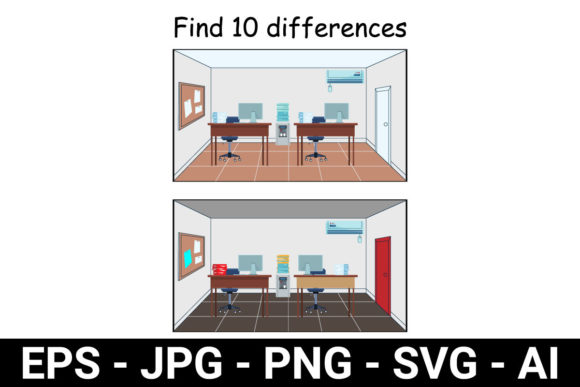
The effectiveness of a puzzle largely depends on its design. For toddlers, the imagery must be relatable, clear, and appealing. Common themes often include indoor settings, such as a cozy room, a busy office, or a playful desk area. These familiar environments help children connect the game to their daily lives.
Consider an illustration featuring a flat-design cartoon room. The scene might include recognizable furniture like a table, a chair, and various decorative items. The differences should be obvious enough for a young child to spot but challenging enough to require thought. For instance, a book might be missing from the shelf, or a lamp might be a different color. These subtle changes encourage the child to look at the detail of each object, reinforcing vocabulary and object recognition.
The use of bright colors and clean lines in vector designs ensures that the images are not visually cluttered. This clarity is crucial for toddlers, who can easily become overwhelmed by overly complex scenes. A well-balanced graphic allows the child to focus on the task at hand without distraction.
Integrating Find-the-Difference Games into Daily Routines
Incorporating these puzzles into a child’s routine does not require a rigid schedule. They can be used as a warm-up activity before more intensive learning sessions, a calming exercise before nap time, or a fun family challenge during weekends. The key is consistency and engagement.
For parents working from home, these activities can serve as a valuable tool for independent play. Setting up a small work station with a few printed pages allows the child to engage in a productive pastime while the parent attends to business matters. It promotes independence and self-directed learning, qualities that are highly valued in modern educational philosophies.
Moreover, these games are excellent for social interaction. Playing together allows parents and caregivers to guide the child’s thinking process. Asking questions like, "What do you see on the left side?" or "Can you find something that is blue?" turns the activity into a dialogue. This interaction enhances language development and strengthens the bond between adult and child.
Choosing the Right Resources
When selecting materials, look for collections that offer variety and quality. A set that includes ten or more unique scenes provides enough content to keep a child interested over several weeks. Ensure that the images are age-appropriate, avoiding overly abstract concepts. The goal is to build confidence, not frustration.
Additionally, consider the technical quality of the files. High-quality vectors ensure that the images remain crisp whether printed on a small piece of paper or displayed on a large screen. This attention to quality reflects a professional approach to education and ensures a better user experience for both the child and the adult facilitating the activity.
Ultimately, Find the Differences Perfect for Toddler games are more than just entertainment. They are a strategic investment in a child’s cognitive development. By combining fun with function, these puzzles lay the groundwork for critical thinking, focus, and visual literacy. Whether through a printed book or a digital app, the joy of discovery remains the same, making every session a step forward in your child’s educational journey.