Strategic Visual Identity: Leveraging Stationery Seamless Pattern for Brand Cohesion
In the crowded digital and physical marketplace, visual consistency is not merely an aesthetic preference; it is a critical component of brand recognition and trust. A Stationery Seamless Pattern serves as a foundational element in establishing this consistency. Unlike standalone illustrations or isolated icons, a seamless pattern offers infinite repeatability, allowing designers and business owners to create cohesive backgrounds, packaging, and digital assets that reinforce brand identity without overwhelming the viewer. When utilized with strategic intent, these patterns transform ordinary touchpoints into memorable brand experiences.
The value of a high-quality stationery seamless pattern lies in its versatility. Whether applied to a corporate report cover, a student’s notebook, or the background of a mobile application, the pattern must align with the broader communication goals. This article explores how to integrate these design elements effectively, ensuring they support long-term objectives rather than serving as mere decorative afterthoughts.
Defining the Strategic Role of Seamless Design Elements
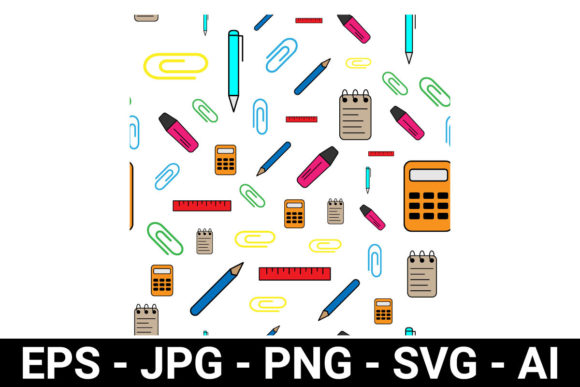
A seamless pattern is a graphic design technique where a tileable image repeats horizontally and vertically without visible seams or breaks. In the context of stationery, this often involves motifs such as pencils, pens, notebooks, highlighters, calculators, and other educational or office-related items. However, the strategic utility extends far beyond the literal representation of these objects.
For entrepreneurs and marketers, a Stationery Seamless Pattern acts as a subtle psychological cue. It signals organization, creativity, and professionalism. When a customer encounters a consistent pattern across your invoice templates, email headers, and product packaging, it reduces cognitive load. The brain recognizes the pattern as part of a unified system, which fosters a sense of reliability. This is particularly crucial for small business owners and freelancers who rely on perceived professionalism to compete with larger entities.
Furthermore, the inclusion of specific elements like a clip, marker, or book within the pattern can subtly communicate the nature of your business. An educational startup might prioritize icons related to study and student life, while a creative agency might focus on art supplies and colorful markers. The choice of elements dictates the narrative.
Technical Versatility and Asset Management
To maximize the return on investment for any design asset, technical flexibility is paramount. A professional-grade Stationery Seamless Pattern package should not be limited to a single file format. The ideal resource includes a comprehensive ZIP folder containing AI, EPS, SVG, JPG, and PNG files. Each format serves a distinct purpose in the workflow of creators and decision-makers.
- Vector Formats (AI, EPS, SVG): These are essential for scalability. Whether you are printing a large banner or a small business card, vector files ensure that the pencil, pen, or notebook icons remain crisp and clear at any size. They also allow for easy color customization to match strict brand guidelines.
- Raster Formats (JPG, PNG): These are ready-to-use options for web developers and social media managers. PNGs with transparent backgrounds are particularly useful for layering over other graphics, while JPGs provide lightweight options for website backgrounds that do not require transparency.
Having access to both vector and raster formats ensures that the graphic elements can be deployed across all channels, from print to digital, without quality loss. This interoperability is a key consideration when selecting design resources for long-term use.
Applications Across Business and Education Sectors
The application of a Stationery Seamless Pattern varies significantly depending on the industry and the intended audience. Understanding these nuances allows for more effective deployment.
Enhancing Educational Materials
In the education sector, visual engagement is directly linked to retention. Teachers and publishers can use colorful, flat-design patterns featuring school supplies to make worksheets, textbooks, and online learning portals more inviting. A pattern that includes a calculator, note, and highlighter creates an immediate association with learning and productivity. For students, these visuals can reduce anxiety and make the study environment feel more structured and supportive.
Elevating Corporate Branding
For businesses, the approach is often more subdued but equally important. A business-oriented pattern might use muted colors and minimalist icons to convey efficiency and clarity. Such patterns are ideal for:
- Internal Communications: Using a consistent background for internal newsletters or intranet sites reinforces company culture.
- Packaging Design: Product boxes wrapped in a custom stationery pattern stand out on shelves and encourage unboxing experiences that are shared on social media.
- Digital Interfaces: Subtle patterns can break up white space in apps or websites, guiding the user’s eye without distracting from the core content.
Supporting Creative Projects
Freelancers and hobbyists often use these patterns for personal projects, such as scrapbooking, journaling, or creating digital planners. The creative potential is vast when the elements are isolated and well-designed. A flat design style ensures that the pattern remains modern and does not clash with other design elements on the page.
Risks of Unintentional Design
While a Stationery Seamless Pattern offers numerous benefits, misuse can lead to negative outcomes. One common risk is visual clutter. If the pattern is too busy or the colors are too vibrant, it can compete with the primary content, making text difficult to read. This is particularly detrimental in office documents or educational materials where readability is paramount.
Another risk is misalignment with brand values. Using a playful, colorful pattern featuring cartoonish stuff and icons for a serious financial consultancy may undermine credibility. Conversely, a sterile, monochrome pattern might fail to engage a younger demographic interested in art and design. Therefore, context is king. Before implementing a pattern, ask: Does this support the message? Does it resonate with the target audience?
Additionally, relying on generic, overused patterns can dilute brand distinctiveness. To avoid this, consider customizing the color palette or arranging the elements uniquely. Even small adjustments can transform a standard set into a proprietary brand asset.
Decision-Making Framework for Implementation
When deciding whether and how to use a Stationery Seamless Pattern, consider the following strategic questions:
- What is the primary goal? Is it to entertain, inform, or persuade? The pattern should support this goal, not distract from it.
- Who is the audience? Students may respond well to bright, dynamic patterns, while corporate clients may prefer understated elegance.
- Where will it be used? Digital screens require different resolution and contrast considerations than print media. Ensure the vector files are optimized for the intended medium.
- How does it fit the broader system? The pattern should complement existing logos, typography, and color schemes. It should feel like a natural extension of the brand, not an unrelated addition.
By approaching design with this level of intentionality, you ensure that every visual element contributes to the overall success of your project. A paper-themed background might evoke tradition and reliability, while a marker-heavy design might suggest innovation and boldness. These subtle cues shape perception.
Long-Term Value of Cohesive Visual Systems
Investing in high-quality, versatile design assets like a Stationery Seamless Pattern yields long-term dividends. It reduces the time and cost associated with creating new visuals for every campaign. Instead of starting from scratch, teams can leverage the existing pattern library to maintain consistency and speed up production.
Moreover, consistent visual branding builds equity over time. Customers begin to associate the specific arrangement of pen, notebook, and clip icons with your brand. This recognition drives loyalty and trust, which are essential for sustainable growth. Whether you are an educator aiming to inspire students or a business owner seeking to streamline operations, the strategic use of seamless patterns is a powerful tool in your arsenal.
In conclusion, a Stationery Seamless Pattern is more than just a decorative background. It is a strategic asset that, when used thoughtfully, enhances communication, strengthens branding, and improves user experience. By understanding the technical requirements, audience preferences, and potential pitfalls, you can harness the full potential of these design elements to achieve better results in both creative and commercial endeavors.