Marker Icon: The Visual Language of Modern Annotation and Design
In the rapidly evolving landscape of digital communication, the Marker Icon has emerged as a subtle yet powerful symbol of emphasis, creativity, and clarity. While it may appear at first glance to be a simple graphic representation of a writing tool, its utility extends far beyond mere decoration. This icon serves as a universal signifier for action—whether that action is highlighting critical data in a business report, annotating educational materials, or adding a personal touch to digital art. As workflows become increasingly hybrid, blending traditional office tasks with modern digital interfaces, the demand for high-quality, versatile visual assets like the marker icon has surged.
The relevance of this symbol lies in its ability to bridge the gap between static information and active engagement. In an era where attention spans are short and information overload is common, the visual cue of a marker suggests immediacy and importance. It tells the viewer, "Look here," or "This matters." For professionals, educators, and creators, integrating such intuitive symbols into their projects is not just an aesthetic choice; it is a strategic decision to enhance user experience and comprehension.
The Evolution from Physical Tool to Digital Symbol
To understand the current significance of the marker icon, one must appreciate its origins. The physical marker—a permanent pen filled with ink, available in black, white, or vibrant colors—has long been a staple in schools, offices, and art studios. It is an essential piece of equipment for drawing, writing, and making marks on paper. The transition from this tangible object to a digital vector or PNG transparent background asset reflects a broader shift in how we interact with information.
Today, the marker is no longer confined to a desk drawer. It exists as a flat design element in web interfaces, a silhouette in mobile apps, and a graphic component in presentation software. This evolution has been driven by the need for consistency across platforms. A well-designed marker icon maintains its recognizability whether it is scaled down for a favicon or enlarged for a billboard. The availability of formats such as EPS 10, AI, SVG, and JPG ensures that designers can deploy this symbol across various media without losing quality or clarity.
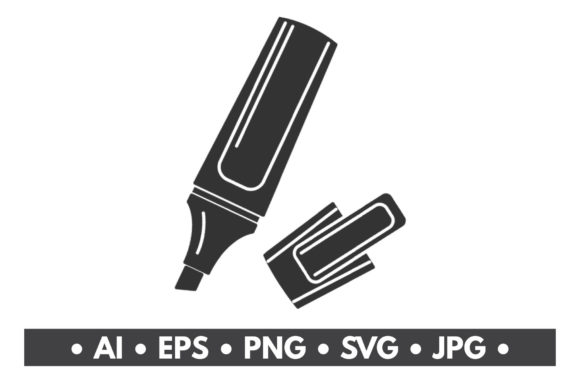
This digital transformation also highlights a change in user expectations. Modern audiences are accustomed to clean, isolated objects that convey meaning instantly. The marker icon, often depicted with a distinct cap and broad tip, fits perfectly into this minimalist aesthetic. It represents the concept of highlighting or marking without the clutter of realistic textures, making it ideal for contemporary web and print design.
Practical Applications in Business and Education
The versatility of the marker icon makes it indispensable across multiple sectors. In the corporate world, particularly within business intelligence and project management, visual cues are crucial for guiding stakeholders through complex data. A marker symbol can denote a key performance indicator, a deadline, or a critical note in a dashboard. When used in presentations, it helps break up text-heavy slides, drawing the eye to specific points that require immediate attention.
In the realm of education, the marker icon resonates deeply with both teachers and students. It evokes the familiar experience of studying, where highlighting key passages in a textbook was a fundamental learning strategy. Digital learning platforms leverage this association by using marker icons to indicate interactive elements, such as areas where students can add notes or highlight important concepts. This familiarity reduces the learning curve for new software, making educational tools more accessible and user-friendly.
- Enhanced Readability: Using marker-style graphics to underline or highlight text improves scanability in long-form content.
- Visual Hierarchy: Icons help establish a clear order of importance, guiding the reader’s eye through the content logically.
- Brand Consistency: Customizing the color and style of the marker icon allows businesses to align visual assets with their brand identity.
For marketers and bloggers, the marker icon is a valuable tool for creating engaging social media graphics and email newsletters. It adds a human touch to digital communications, suggesting that a real person has curated or emphasized the content. This perceived personalization can increase engagement rates and foster a stronger connection with the audience.
Design Considerations and Technical Formats
When selecting a marker icon for your projects, understanding the technical specifications is vital. The choice between vector and raster formats can significantly impact the final output. Vector formats like AI and SVG are ideal for web and print designs that require scalability. They allow the icon to be resized infinitely without pixelation, ensuring crisp lines and smooth curves regardless of the display size. This is particularly important for responsive web design, where icons must adapt to various screen dimensions.
On the other hand, raster formats such as PNG transparent background and JPG are suitable for specific use cases where transparency or quick loading times are prioritized. A PNG with a transparent background allows the marker icon to be placed seamlessly over any colored surface or image, maintaining a professional and polished look. This is especially useful for overlaying icons on photographs or complex backgrounds in marketing materials.
Designers should also consider the style of the icon. Flat design remains popular for its simplicity and clarity, but there is a growing interest in more detailed illustrations that capture the texture of ink or the sheen of the plastic casing. Whether you prefer a minimalist silhouette or a more realistic depiction, the key is consistency. The icon should complement the overall design language of your project, rather than standing out as an unrelated element.
Integrating Marker Icons into Modern Workflows
As remote work and digital collaboration become the norm, the role of visual annotation tools has expanded. Software applications now incorporate digital markers that mimic the functionality of their physical counterparts. These tools allow teams to collaborate in real-time, marking up documents, designs, and code with precision. The marker icon serves as the interface button for these actions, providing an intuitive entry point for users to engage with the content.
For freelancers and entrepreneurs, mastering the use of such icons can enhance their service offerings. By incorporating custom graphics into client deliverables, they can add value and differentiate themselves in a competitive market. Whether it is creating a unique set of icons for a startup’s app or designing engaging educational materials for an online course, the ability to effectively use visual symbols like the marker icon is a valuable skill.
Moreover, the accessibility of high-quality assets has democratized design. With resources offering 100 vector packs and diverse file types, even those without extensive graphic design training can create professional-looking materials. This empowerment leads to more creative and visually appealing content across the web, raising the standard for digital communication.
Future Trends and Lasting Relevance
Looking ahead, the marker icon is likely to remain a staple in visual communication. As augmented reality (AR) and virtual reality (VR) technologies mature, we may see three-dimensional interpretations of this symbol, allowing users to interact with digital annotations in immersive environments. However, the core function of the marker—to highlight, emphasize, and personalize—will remain unchanged.
The trend towards personalized and interactive content will continue to drive demand for versatile design elements. Users expect interfaces that feel responsive and intuitive, and familiar symbols like the marker play a crucial role in meeting these expectations. By understanding the psychological impact of these icons and leveraging their technical flexibility, creators and businesses can craft more effective and engaging experiences.
In conclusion, the Marker Icon is more than just a graphic; it is a functional tool that enhances clarity and engagement in both digital and print media. From its roots as a physical writing instrument to its current status as a versatile digital asset, it has adapted to meet the changing needs of users. Whether you are designing a website, preparing a business presentation, or creating educational content, incorporating a well-chosen marker icon can elevate your work. Embrace the flexibility of formats like EPS, SVG, and PNG, and let this simple symbol help you make your mark in a crowded digital landscape. Happy shopping 🙂.